
2321
23: week of manufacture
The tire was built in the 23rd week of the year.
21: year of manufacture
That year was 2021, so the tire reaches five years of age in week 23 of 2026.
A Ferrari is developed around specific tires. For each model, Ferrari approves particular tires in particular sizes, and those tires carry an approval marking on the sidewall.
The tire is the only part of the car that touches the road. Steering response, braking distance and the electronic systems that manage traction are all calibrated around the approved fitment.
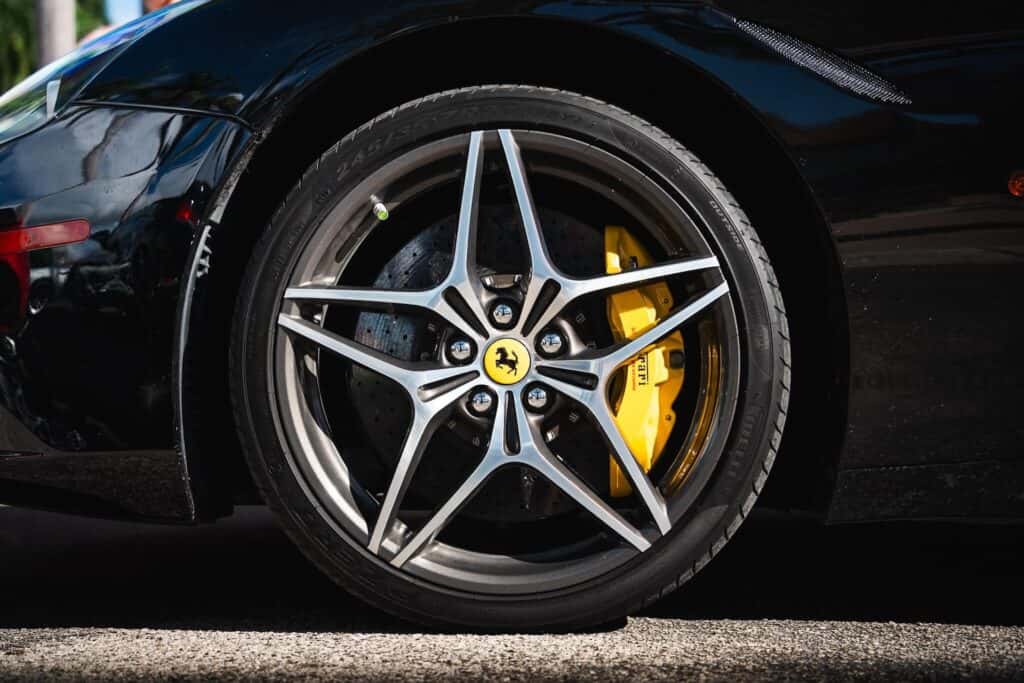
A Ferrari takes the tires approved for that model, in the sizes listed for the front and rear axles. Most Ferraris run different sizes front and rear, so the two axles are not interchangeable.
The approved tire is a specific version of a performance tire, developed with the tire maker for Ferrari. It can look identical to the version sold for other cars, which is why the sidewall marking matters more than the tread pattern.
Tire width in millimeters.
Sidewall height as a percentage of width.
Radial, rated for high speed, on a 20-inch wheel.
The weight each tire is rated to carry.
The sustained speed the tire is built for.
Ferrari’s approval code, molded near the size.
Shown as an example. Your owner’s manual and tire placard list the approved sizes for your Ferrari.
A non-approved tire in the right size can still differ in sidewall stiffness, compound and rolling diameter. Those differences change how the car turns in, how it stops and how it behaves at the limit.
Ferrari’s traction, stability and ABS systems read wheel speed at every corner. They’re calibrated around the approved fitment, and a mismatched tire gives them different information to work with.
The same logic applies to every specified part of the car, from the tires to the fluids Ferrari specifies.
Every tire carries a DOT code on the sidewall, and the last four digits are its build date. The first two are the week, and the last two are the year.
The tire was built in the 23rd week of the year.
That year was 2021, so the tire reaches five years of age in week 23 of 2026.
The date code may sit on the inner sidewall, so it isn’t always visible without turning the wheel.
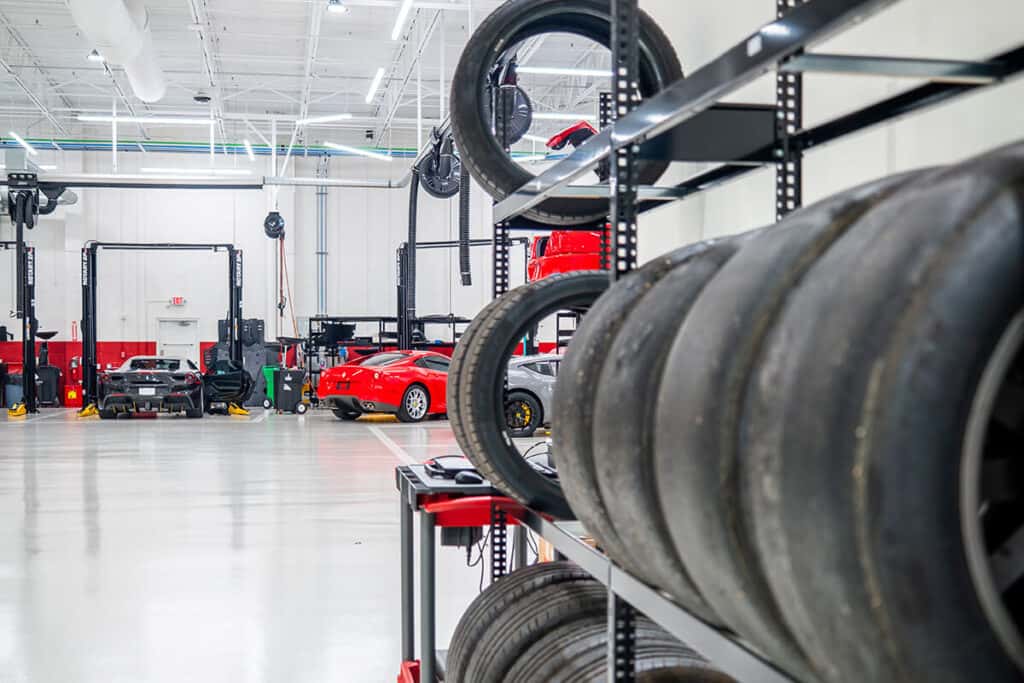
Many Ferraris cover a few thousand miles a year, so their tires age out before they wear out. Rubber hardens with time, heat and sunlight, and grip falls even when the tread looks deep.
Tire makers generally advise a professional inspection once a tire passes five years. Your owner’s manual lists Ferrari’s guidance for your car, and replacement by age applies whatever the tread depth.
Replace sooner if you see cracking in the sidewall or tread grooves, a bulge, uneven wear, or a vibration that doesn’t settle as the tires warm. Tires that sat through a long storage period are worth a closer look, which our after-storage checklist covers.
Tire pressure rises as tires heat up, roughly 1 psi for every 10°F. A reading taken on a hot afternoon, or after a drive, will look higher than it really is.
Set pressures cold, before driving, to the figures on your Ferrari’s tire placard or in the owner’s manual. In South Florida, early morning is the most reliable time to check.
Never release air from hot tires to meet the recommended pressure. They’ll be underinflated once cooled. For more tips, see our guide to preparing your Ferrari for hot weather.
Replace tires at least in axle pairs, with the same approved tire on both sides. Mixing brands, models or approval codes across an axle changes how the car handles.
Fitting involves more than mounting and balancing. Each wheel carries a tire pressure sensor that needs careful handling, and an alignment check makes sure new tires wear evenly from the start.
At an Official Ferrari Dealer, the approved fitment for your model is confirmed before the first tire comes off. It also goes on record, alongside the rest of your service history.
Our Ferrari-trained technicians can inspect tire age, wear and pressure, and confirm the approved fitment for your model.
The tires Ferrari approves for that model, in the sizes listed for each axle. Approved tires carry a Ferrari approval marking on the sidewall.
A tire in the right size will fit, but it may differ in construction and compound. That changes handling and braking, and the car’s electronic systems are calibrated around the approved fitment.
Read the last four digits of the DOT code on the sidewall. The first two are the week of manufacture and the last two are the year.
When they reach the end of their tread or their age, whichever comes first. Low-mileage Ferraris usually reach the age limit first, so have tires older than five years inspected.
At least in axle pairs, with the same approved tire on both sides. Replacing all four keeps the set matched.
Book a tire inspection with our Ferrari-trained technicians, and we’ll fit the approved tires for your model when it’s time.
Call service (561) 878-9031
Shopping for your next Ferrari? Ferrari Approved cars are inspected before sale, tires included.